Where you can really earn in Phuket in 2026 and where not to go: a guide to the areas
If you are choosing property in Phuket, the main question is not which project to buy, but which area to buy in.
 Districts
Contents0%
It is the location that determines who will rent your property, how liquid it will be and what growth potential it can show in a few years.
Today we look at Phuket’s five most sought-after areas. Not at the beautiful beaches, but at what each area is good for and who it really suits.
Bang Tao
Let’s start with Bang Tao, the area now considered Phuket’s main hub for premium property.
This is where you find Laguna Phuket, a gated resort complex with premium villas and hotels; Boat Avenue, a popular pedestrian street with restaurants and bars; the Porto de Phuket shopping centre, designed like an Italian harbour town; international schools, modern clinics and most of the new high-end projects. That is why the area remains one of the most liquid on the island: property here is in demand for both short-term and long-term rental.
But there is a catch. Today Bang Tao has the largest volume of new construction in Phuket. Competition between projects is growing, so the “Bang Tao” address alone is no longer enough. You need to look at the developer, the project concept, the quality of management and how much supply there is nearby.
Where you could once say “Buy in Bang Tao”, today it is more accurate to say “Buy the right project, and not necessarily in Bang Tao”.
Who is it for? Those looking for the most liquid property who want to combine comfortable living with strong rental demand.
Nai Yang
The next area is Nai Yang, in the north of the island next to the international airport. And this is a completely different story.
Nai Yang’s main advantage is limited supply. The area borders a national park, so large-scale development is impossible here. That is exactly what makes it interesting for long-term investors.
Prices here are currently lower than in Bang Tao, while the growth potential remains. But it is important to understand that Nai Yang is not about quick results — it is about patience.
There are downsides too. Infrastructure is still developing, and there are far fewer restaurants and shops than in the central part of the island.
Who is it for? Those ready to invest with a 5–10-year horizon who want to enter the area before it develops in earnest.
Surin and Kamala
Now let’s move a little further south, to Surin and Kamala.
Despite being close to each other, these are two different markets.
Surin is one of Phuket’s scarcest areas. There is almost no free land left, so new projects appear rarely. It is precisely this limited supply that keeps interest in property here high.
Kamala is a more varied market. It is home to the famous “Millionaires’ Mile” hill with some of the most expensive villas on the island. The area is developing actively, but the quality of properties depends heavily on the micro-location: neighbouring projects can differ noticeably in views, privacy and liquidity.
Who is it for? Those looking for premium property who understand the value of limited supply.
Patong
Patong is Phuket’s best-known area and the island’s main tourist centre.
From an investment point of view, it is first and foremost a short-term rental market. The high tourist flow ensures good occupancy almost all year round.
But it is important to understand that Patong is already a mature market. Significant capital growth is rarely expected here; the main source of income is rent. Land in Patong is among the most expensive on the island, so projects are often overpriced.
The area does not suit everyone as a place to live. Heavy traffic, busy nightlife and large numbers of tourists make it very lively.
Who is it for? Those who see property as a tool for earning rental income.
Nai Harn and Rawai
The south of the island has a completely different pace of life.
Rawai and Nai Harn have long been the areas chosen by expats, entrepreneurs and families who live in Phuket permanently. Everyday infrastructure is well developed here: restaurants, sports clubs, schools, shops and services.
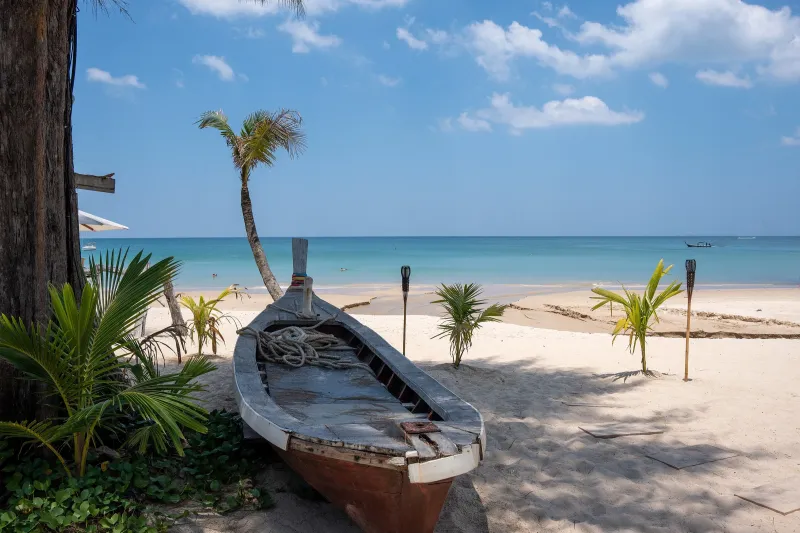
Nai Harn beach deserves a special mention — one of the most beautiful on the island: a wide strip of white sand, clear turquoise water and almost no buildings along the shore, which is rare for Phuket. In the evenings people come here to watch the sunset, and next to the beach is Nai Harn Lake, where locals go running and cycling.
For an investor this means steady demand for long-term rentals. People here rarely rent for a week, but often rent for several months to several years.
There are downsides too. The drive to the airport takes about an hour, and Rawai beach is not suitable for swimming. In addition, more new projects have appeared here in recent years, so competition is gradually increasing.
Who is it for? Those considering property to live in themselves or to let on a long-term basis.
Conclusion
Look at the map of Phuket and it becomes clear: there is no single best area. There are areas that suit different goals.
- Bang Tao — for those who value liquidity and developed infrastructure.
- Nai Yang — for investors with a long-term horizon.
- Surin and Kamala — for those looking for the scarce premium segment.
- Patong — for a strong rental flow.
- Rawai and Nai Harn — for comfortable living and long-term rental.
That is why we always recommend starting not with choosing a project but with answering the question: what should this property do for you? Once the goal is clear, choosing the area and the property itself becomes much easier.